Every year, the industry produces a fresh batch of “state of mobile” takes.
AI is going to change everything. CTV is the next big channel. Casual gaming is dead. Hypercasual is dead. Social is dying. Privacy will kill performance marketing.
Some of it is true. A lot of it is the same prediction recycled with a new year attached. And a surprising amount of it is written by people who have a product to sell you.
So here’s an honest version. What’s actually different in 2026, what’s noise dressed up as signal, and what that means for teams building real businesses in mobile gaming and apps.
AI tooling has made it genuinely fast and cheap to produce creative at scale. Teams that used to ship 20 concepts a month are now shipping 200. That sounds like a competitive advantage until you realize every other team is doing the same thing.
The result is more ads competing for the same attention, and users who are getting faster at filtering out anything that feels generic. The bar for what actually stops a scroll has gone up significantly. And if your “AI creative agency” or internal team is making junk AI, your ads are more than likely going to come across as AI slop…game over.
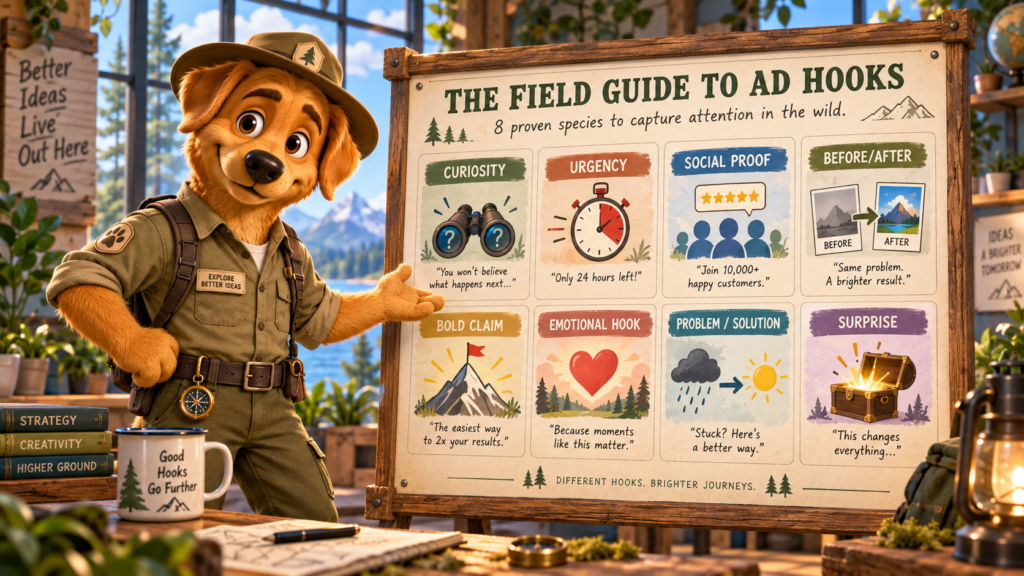
The teams winning the creative game right now aren’t the ones producing the most. They’re the ones with better systems for knowing what’s working, iterating faster on the concepts that have legs, and killing the ones that don’t. A strong hook gets you the click. Smart creative testing…let’s say it again, Smart Creative Testing is what tells you which hooks are worth building on. Volume without that learning loop is just noise.
A few years ago, every conference talk was about iOS 14 and the death of mobile attribution. It was real disruption, and the industry responded with a lot of anxiety and not always a lot of clarity.
That phase is mostly over.
The teams that adapted have rebuilt their measurement logic around incrementality, modeled conversions, and LTV-oriented decision making. They’ve accepted that perfect signal is gone and moved on to making good decisions with imperfect data.
One thing that’s become clearer through all of this is how much creative quality influences the metrics that matter. When your creative is doing its job properly, users arrive with context. They understand what they’re installing. That changes D1 behavior, retention, and downstream LTV in ways that bidding strategy alone never could. The teams connecting creative performance to cohort quality are making smarter decisions than the ones optimizing in isolation.
The teams still waiting for attribution to go back to normal are the ones falling behind. That version of normal isn’t coming back.
This one has been “happening” for a few years, but in 2026 it’s actually happening.
The conversation has shifted decisively toward payback period, LTV quality, and monetization design. Installs as a headline metric are still useful for tracking volume, but teams optimizing purely for install count are finding that the downstream economics don’t hold up.
The better question isn’t how many users did we acquire. It’s which users paid back within our window, at what cost, and what does the tail look like. Creative plays directly into this. Ads that attract the right user with an honest, specific representation of the product consistently produce better cohorts than ads engineered purely to drive clicks. The gap between a high-CTR creative and a high-LTV creative is real, and the teams that understand the difference are building better businesses.
While the industry has spent years debating the death of hypercasual and the rise of hybrid monetization, mid-core games have been growing steadily and with less noise around them.
The genre benefits from players who are willing to invest time, which tends to produce stronger LTV and more sustainable monetization compared to ad-heavy casual games. The UA challenge is harder because the audience is narrower, but that’s also what makes creative quality so decisive in this category. Generic creative doesn’t convert a mid-core player. Creative that speaks directly to what makes the game worth investing in does. The studios figuring that out are pulling real players from a competitive market.
AI tools are genuinely useful. Concept generation, creative variation, copy testing, audience signal processing. These are areas where AI is saving teams real time and producing real output.
But the pitch that AI is replacing creative strategy or making human judgment obsolete is still mostly marketing. The teams using AI well are using it to accelerate work that skilled people are still directing. They’re generating more starting points, testing faster, and iterating with more discipline. The teams using AI as a substitute for creative thinking are producing high volumes of forgettable ads.
The distinction matters because a lot of vendor messaging in 2026 is built around the former while delivering the latter.
It isn’t. Meta is still where most mobile gaming budgets go for volume. TikTok is still growing as a performance channel. The costs are higher, and the targeting is noisier than it used to be, but the scale is still there, and the algorithms have gotten better at finding users who convert.
What has changed is how much creative diversity matters on these platforms. Running one or two concepts at scale used to work. Now fatigue sets in faster, auction dynamics punish stale creative, and the teams refreshing concepts regularly are getting better efficiency out of the same channels. That’s not a media buying insight. That’s a creative operations insight.
The post-pandemic correction happened. It was real, and it was painful for many studios and workers. But framing it as a long-term contraction misreads what happened.
The market pulled back from an artificially inflated peak, stabilized, and is growing again in the categories that have strong monetization fundamentals. The studios that built businesses on pandemic-era retention numbers without durable monetization designs didn’t survive that correction. The ones that did are in better shape than they were three years ago.
Casual gaming is not dead. It is more competitive, more expensive to operate, and less forgiving of thin monetization. That’s different from dead.
The hybrid casual model has extended the viability of the genre for studios that execute it well. And creative is a bigger differentiator here than most teams acknowledge. When every casual game is running similar gameplay loops and similar ad formats, the studios investing in distinct creative concepts and testing them with real discipline are the ones carving out sustainable positions. The studios treating creative as an afterthought are the ones who feel like the category is dying.
Every year there’s an expectation that the privacy environment will settle into something more predictable. Every year it doesn’t.
The honest version of this prediction is that measurement will keep getting harder and the teams investing in first-party data and incrementality frameworks now will have a structural advantage in two years that will be very difficult to close. Creative quality becomes even more important in this environment. When you can’t rely on precise targeting to do the heavy lifting, the ad itself has to work harder to find and convert the right person.
The takeaway isn’t that 2026 is uniquely chaotic. Every year in mobile feels chaotic from the inside.
The takeaway is that the gap between teams with good systems and teams running on intuition and legacy playbooks is widening. The fundamentals that separate them aren’t complicated.
Creative that’s built for the channel it’s running on, not repurposed across all of them. A testing cadence that produces real learning, not just more spend. Measurement logic that connects creative performance to LTV, not just top-of-funnel metrics. A channel mix that uses social for what social is good at and adds other layers to do what social can’t.
The teams that stay close to their own data, keep their creative operation honest, and build toward better unit economics tend to be the ones still standing at the end of the year
If you’re trying to get an honest read on where your growth setup actually stands in 2026, that’s the kind of conversation we’re good at.
No trend report framing. Just a real look at what’s working, what isn’t, and where the leverage is.