Scaling creative in mobile gaming is already hard.
Scaling creative in iGaming, sportsbook, or sweepstakes is a different game entirely.
You are not just fighting for attention. You are navigating a moving set of rules, platform policies, and internal reviews that can slow everything down if you are not structured.
Most teams run into the same problem at some point.
They finally build a creative pipeline that can produce volume. Testing starts to work. New concepts are coming in regularly.
Then compliance hits.
Ads get rejected. Accounts get flagged. Campaigns pause. Momentum disappears.
It usually does not happen because the team is careless. It happens because the process was built for speed, not for scale inside a regulated environment.
The goal is not to slow down creative.
The goal is to build a system where creative can move fast without constantly stepping on landmines.
The typical breakdown looks like this.
Creative is developed quickly. Concepts get pushed into production. Variations are launched into campaigns.
Only after that does someone ask:
“Is this actually compliant?”
At that point, you are already exposed.
The ad might be live. The platform might flag it. Or worse, you get inconsistent enforcement where some ads run and others get pulled.
That creates confusion and wasted spend.
In regulated verticals, QA cannot sit at the end of the pipeline.
It needs to be part of how creative is built from the beginning.
The biggest mistake teams make is treating compliance like a list of things they are not allowed to do.
That mindset slows everything down.
A better approach is to define guardrails.
Clear, simple rules that creative can operate inside without needing constant approval.
For example:
How bonuses are referenced
What language can be used around winning
What disclaimers are required
What visual elements are risky
Once those guardrails are defined, creative teams can move much faster because they are not guessing.
They know the boundaries.
That turns compliance from a blocker into a framework.
If QA only happens right before launch, you are going to waste time.
Concepts get built that should never have made it that far.
A better system includes QA checkpoints earlier in the process.
At the concept stage
At the scripting stage
At the final creative stage
The earlier issues are caught, the less expensive they are to fix.
This does not need to be heavy.
It can be as simple as a checklist that is applied consistently.
But it needs to exist.
One of the easiest ways to reduce compliance risk is to standardize repeatable elements.
Disclaimers
Legal language
Bonus callouts
Brand-safe phrasing
If those components are rebuilt every time, mistakes happen.
If they are templated, the risk drops significantly.
This is especially useful when you are producing high volumes of creative.
Instead of reviewing everything from scratch, you are reviewing the parts that actually change.
That speeds things up without lowering quality.
There is a common belief that compliance makes ads worse.
That only happens when teams default to playing it safe in every direction.
Strong creative does not come from pushing risky claims.
It comes from clear hooks, good pacing, and understanding what actually resonates with the audience.
You can still use:
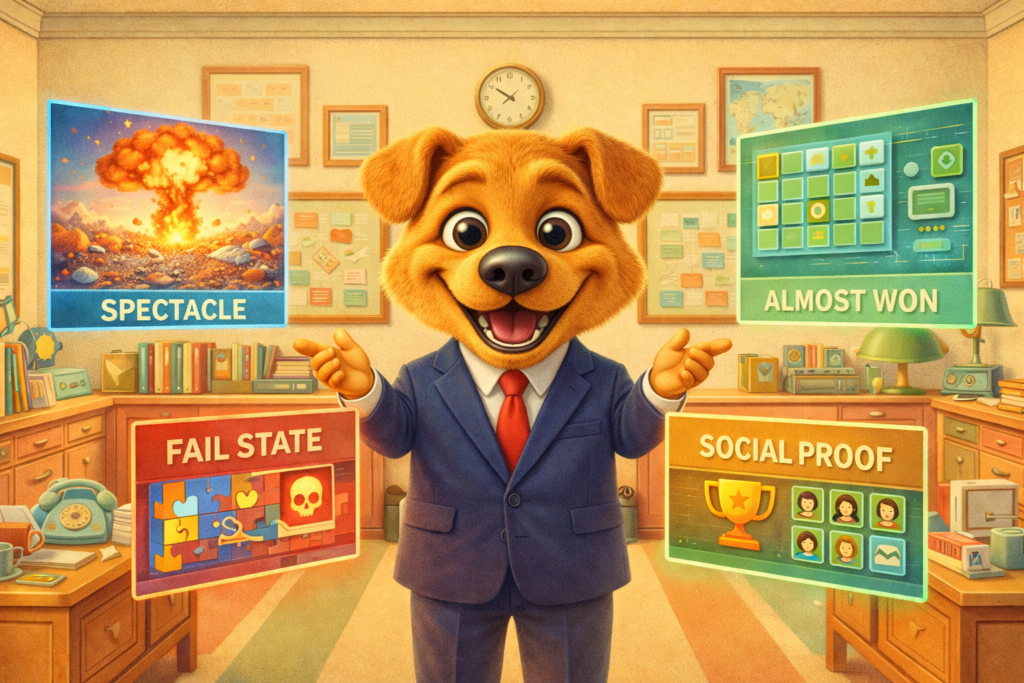
Fail moments
Almost-wins
Social dynamics
Gameplay tension
None of those rely on questionable claims.
In many cases, the most effective creative is already aligned with compliance because it focuses on the experience, not exaggerated promises.
Every platform enforces rules slightly differently.
What passes on one platform may get flagged on another.
That is part of the environment.
Instead of chasing perfect consistency, it helps to track patterns.
Which phrases get flagged repeatedly
Which visuals trigger reviews
Which formats tend to pass cleanly
Over time, those patterns become just as valuable as performance data.
They inform how creative is built going forward.
In regulated verticals, speed still matters.
But it needs to be controlled speed.
If creative is constantly getting pulled or rejected, the system is not actually fast.
It just looks fast until something breaks.
A well-structured QA process allows teams to move quickly with fewer interruptions.
Fewer resets. Fewer pauses. Fewer surprises.
That consistency is what allows scaling to actually happen.
Creative scale is not just about producing more ads.
It is about producing more ads that can run.
In iGaming and sweepstakes, that distinction matters.
A strong pipeline balances three things:
Creative quality
Testing velocity
Compliance consistency
If any one of those breaks, growth becomes unstable.
But when they work together, teams can scale without constantly worrying about what might get flagged next.
And that is where things start to feel predictable again.
Work Dog Studios helps mobile apps, games, and iGaming companies build performance-driven creative and run scalable user acquisition across Social, Google, Apple Ads, and CTV.
If you’re exploring ways to improve creative testing and accelerate campaign performance, contact us.