Here is the strange tension at the heart of wellness app marketing in 2026. Consumers want these products more than ever, and they believe what these products tell them less than ever.
The wellness app market hit $4.41 billion in 2026 and is forecast to nearly quadruple by 2034. Health and wellness is the one discretionary spending category where more consumers plan to increase spending than cut it this year, even as they pull back on travel and home improvement. People are treating wellness as non-negotiable.
And yet 62% of consumers say they do not trust health claims made by companies in the space. A May 2026 survey found people now make decisions about diet, nutrition, supplements, and longevity based more on social media creators and AI than on their own doctors. The trust didn’t disappear. It moved. It just moved somewhere your ad account cannot directly buy.
That is the category you are acquiring users in. High demand, low trust, and an audience that has been burned enough times to smell a fitspo grift from three scrolls away. The teams that win here understand that the skepticism is the market, not an obstacle to it.
Most performance marketers walk into wellness expecting it to behave like any other subscription category. It does not, and the reasons are structural.
Platform policy is the first wall you hit. Google, Meta, and the rest now enforce strict review on claims related to weight loss, medical outcomes, and disease prevention. Creative rejection rates are climbing. The aggressive before-and-after, lose-15-pounds, fix-your-gut direct response playbook that powered the category five years ago is now a fast track to a disabled ad account. The lane you used to drive in is closed.
Then there is the data sensitivity problem. Wellness apps collect mood data, sleep patterns, health habits, and sometimes actual medical information. Roughly 68% of consumers cite privacy concerns as a reason they hesitate to sign up. Every permission your onboarding asks for is a moment where a skeptical user decides whether you seem trustworthy or predatory. Aggressive targeting that feels like you know too much about someone backfires hard in this category in a way it never would for a mobile game.
And the economics are brutal at the back end. Freemium wellness apps convert to paid at roughly 5 to 10%. The category is crowded to the point of saturation, with most apps offering near-identical sleep, activity, and calorie tracking. When your product looks like forty other products and only one in ten free users ever pays, your acquisition math has very little room for waste.
Here is where most teams get the strategy backwards. They treat consumer skepticism as friction to overcome with a louder, more confident pitch. The data says the opposite works.
The brands winning in wellness lead with credibility before they lead with the claim. Calm built its entire acquisition engine on visible expert credentials, partnering with named therapists, sleep scientists, and wellness professionals so that a skeptical first-time user has a reason to believe before they are ever asked to subscribe. The expertise is the hook.
This is the EEAT principle showing up directly in your CPI. Experience, expertise, authoritativeness, and trustworthiness are not abstract SEO concepts in this category. They are conversion levers. A real MD explaining hormonal acne in a calm, human voice outperforms a polished brand spot saying the same thing. One of telehealth brand Allara’s highest-performing creatives was a patient talking into a front-facing camera with almost no production value, and it racked up 12.4 million plays. Less polish, more trust, better numbers.
That is the creative insight the whole category runs on. In wellness, the things that signal authenticity beat the things that signal production budget. Real practitioners over actors. Specific evidence over vague promises. Honest scope over miracle claims. A user who has been lied to by the entire supplement industry reads a slick, overconfident ad as a warning sign.
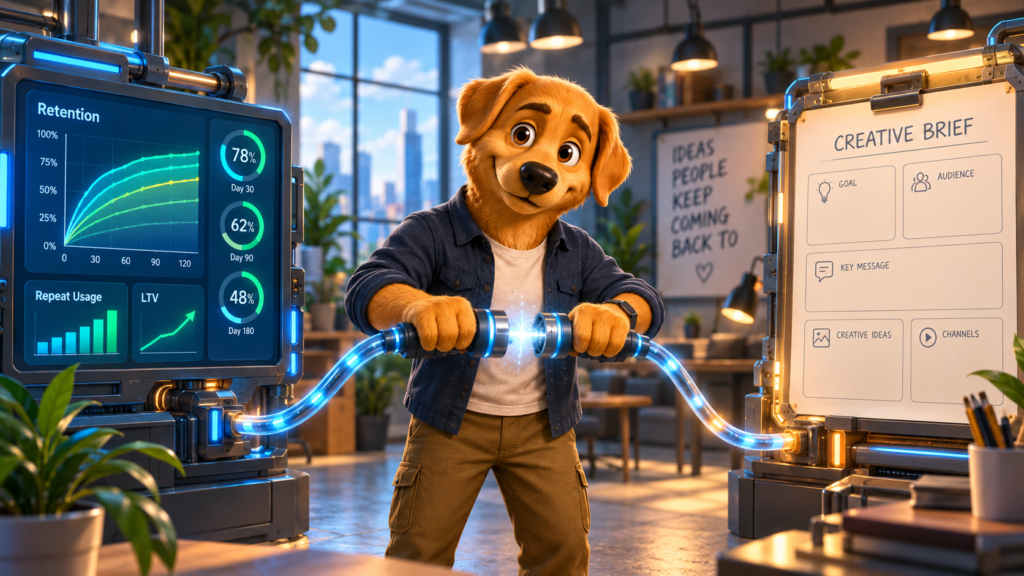
So the brief is not “make it look premium.” The brief is “make it look true.” Those are very different creative directions, and the teams that understand the difference are building ads that convert a suspicious audience instead of confirming its suspicions.
The creative patterns that perform in wellness are specific, and they hold up across mental health, fitness, sleep, and nutrition.
Expert-led creative carries the most weight. Putting a credentialed human on camera, a clinician, a registered dietitian, a sleep researcher, gives a skeptical viewer a credibility anchor. The trust transfers from the expert to the product. This is why named-expert partnerships have become a performance channel in wellness, not just a brand play.
Authentic creator and user content outperforms brand-produced spots. The wellness audience has developed a finely tuned filter for advertising, and the content that slips past that filter looks like a real person sharing a real experience. UGC-style creative and creator partnerships with smaller, trusted voices consistently beat high-gloss brand campaigns on cost per acquisition.
Education-first framing beats claim-first framing. The research is consistent that wellness users trust brands that inform rather than sell. Creative that teaches something, explains a mechanism, or helps a user understand their own problem builds the kind of trust that survives the jump to a subscription page. It also keeps you on the right side of platform policy, since you are educating rather than promising medical outcomes.
Privacy-forward messaging reduces signup friction. When your creative and your onboarding make data practices transparent and respectful, the 68% of users worried about privacy have one less reason to bounce. Saying clearly what you will and will not do with someone’s data is a trust signal, and trust signals convert in this category.
Specificity beats hype every time. The audience has heard every superlative. What they have not heard is a precise, honest description of what your app does, who it is for, and what it will realistically do for them. Clarity reads as confidence. Vagueness reads as a con.
A few practical notes on where and how this plays out.
iOS dominates the category, expected to drive around 46% of wellness app market share in 2026, largely because Apple’s privacy reputation makes skeptical health users more comfortable. That has direct implications. Your highest-intent, highest-trust audience skews iOS, which means navigating the same attribution challenges every iOS advertiser faces while serving an audience that is unusually sensitive to feeling tracked. The measurement discipline has to be tight and the targeting has to feel light.
The privacy sensitivity also reshapes targeting strategy. Behavioral signals, lifecycle stage, and preference-based segmentation work. Targeting that leans on sensitive personal health data erodes the exact trust you are trying to build. The most effective wellness teams segment on intent and behavior, not on inferred health conditions, both because it performs better and because it keeps them out of compliance trouble.
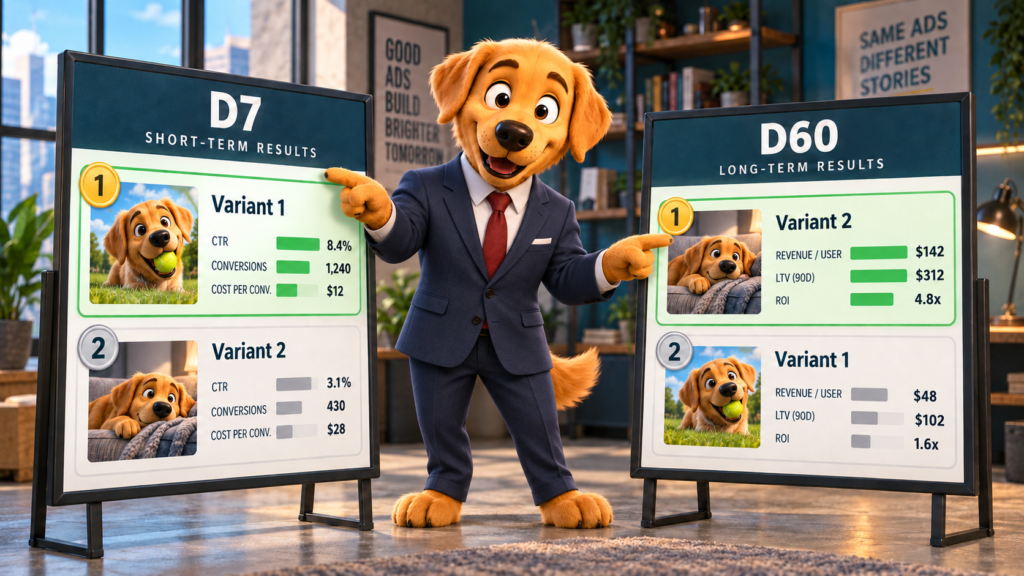
And because paid acquisition is getting more expensive while trust is the actual currency, the smartest teams treat creative testing as their primary lever. With conversion rates as low as 5 to 10% and a saturated field of look-alike competitors, the team that systematically tests credibility angles, expert formats, education hooks, and trust signals will find the combinations that move CPI in a way no amount of bid optimization can match. In a category this skeptical, the creative is doing the persuasion. Everything else is just delivery.
Wellness is a category where the usual performance marketing instincts can actively hurt you. Louder claims, slicker production, and aggressive targeting all read as red flags to an audience that has learned to distrust exactly that. The teams growing efficiently have figured out that credibility is the creative strategy, that real practitioners and honest specificity outperform polish and promises, and that the relentless testing of trust signals is where the acquisition math actually gets solved.
The skepticism is not in your way. It is the brief. Build for it and you build for the part of the funnel that every competitor is fumbling.
If you are running growth for a health or wellness app and the old direct-response playbook is getting your ads rejected and your CPIs climbing, the Work Dog team builds trust-first creative and tests it with the discipline this category demands. Reach out and let’s get into it.